
It has been quietly changing over the last few years.
More young women are starting to think differently about life. It’s no longer just about getting a stable job or following a fixed path. There’s a stronger focus now on independence — real independence. The kind where you can make choices without constantly worrying about money.
Because at the end of the day, freedom isn’t just emotional or social.
It’s financial.
And the truth is, while most of us were taught how to study, get good grades, and build a career, almost no one actually explained how to manage money properly. Not how to save it, not how to grow it, and definitely not how to make it work for us.
If you’ve ever felt like you’re earning but still not fully in control, or unsure where your money disappears every month, you’re not alone.
Let’s go through this step by step in a way that actually makes sense.
Why Financial Independence Before 30 Matters More Than You Think
Financial independence doesn’t mean becoming extremely wealthy at a young age.
It simply means having enough control over your finances to live life on your own terms.
It’s the ability to make decisions without feeling stuck. Whether it’s leaving a job that no longer feels right, taking a break, moving somewhere new, or even just handling unexpected situations without panic.
When money is not a constant worry, your entire mindset shifts.
And one important thing to understand is this: starting early matters more than earning big. Time gives your money space to grow, and that makes a bigger difference than most people realise.
Step 1: Get Clear About Your Spending
Before anything else, you need awareness.
Not assumptions, not guesses — actual clarity.
A lot of people feel like they don’t spend much. But once they start tracking, the picture looks very different. Small, regular expenses often go unnoticed. Subscriptions you forgot about, frequent food orders, quick online purchases — all of it adds up over time.
So the first step is simple: track everything for at least a month.
You don’t need complicated tools. A basic notes app or spreadsheet is enough.
Divide your spending into categories:
- Fixed expenses like rent, bills, or loan payments
- Essentials like groceries and travel
- Lifestyle spending like eating out or shopping
- Unplanned or random expenses
This step might feel uncomfortable at first, but it’s necessary. Once you see where your money is actually going, you can start making better decisions.
Step 2: Create a Budget That Feels Sustainable

Budgeting often sounds restrictive, which is why many people avoid it.
But a good budget doesn’t feel like a punishment. It feels like structure.
Instead of cutting everything, focus on being intentional with your money.
A simple framework that works for many people is:
- 50% for needs
- 30% for wants
- 20% for savings and investments
This isn’t a strict rule. You can adjust it depending on your situation. The goal is to make sure that saving and investing are part of your plan, not something you do only if money is left at the end.
Also, leave some space for things you enjoy. Completely removing flexibility usually leads to frustration and overspending later.
Step 3: Build an Emergency Fund First

Before you think about investing or growing your money, you need a safety net.
An emergency fund is exactly that — money set aside for situations you didn’t plan for.
This could include:
- Losing your job
- Medical expenses
- Urgent travel
- Family emergencies
Ideally, you should aim to save enough to cover three to six months of your basic expenses.
If that feels like a lot, start small. Even saving for one month is a strong beginning.
Keep this money separate from your regular spending account. It should be easily accessible but not something you casually use.
This step is less about growth and more about stability.
Step 4: Start Saving With a Clear Reason

Saving becomes easier when you know why you’re doing it.
Without a purpose, it can feel like you’re just holding money without direction.
Take a moment to think about your goals. They don’t have to be complicated.
It could be something like:
- Moving out or changing cities
- Starting your own work or business
- Taking a course or continuing education
- Travelling
- Building long-term security
When your savings are tied to something meaningful, you’re more likely to stay consistent.
Step 5: Begin Investing, Even If It Feels Unfamiliar
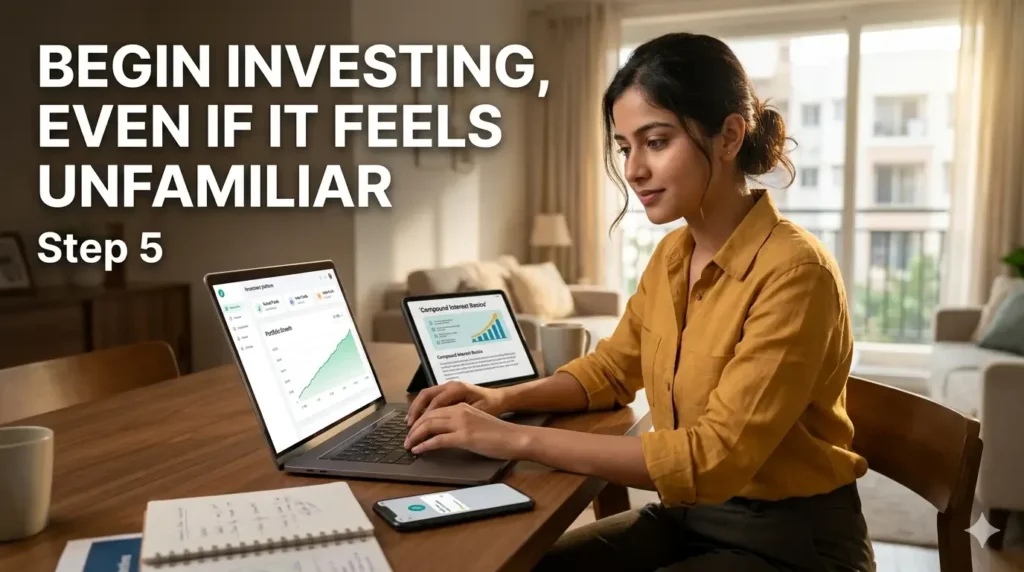
Investing can seem intimidating at first, especially if you’ve never been exposed to it.
But avoiding it completely is not the safer option.
Money that sits idle loses value over time because of inflation. Investing helps you grow it.
You don’t need to start big or understand everything immediately.
Start with the basics:
- Systematic investments through mutual funds
- Index funds for long-term growth
- Retirement-focused options
- Safer fixed-income instruments
The important thing is consistency.
Even small investments made regularly can grow significantly over time. And the earlier you begin, the more you benefit from compounding.
Step 6: Add an Extra Source of Income
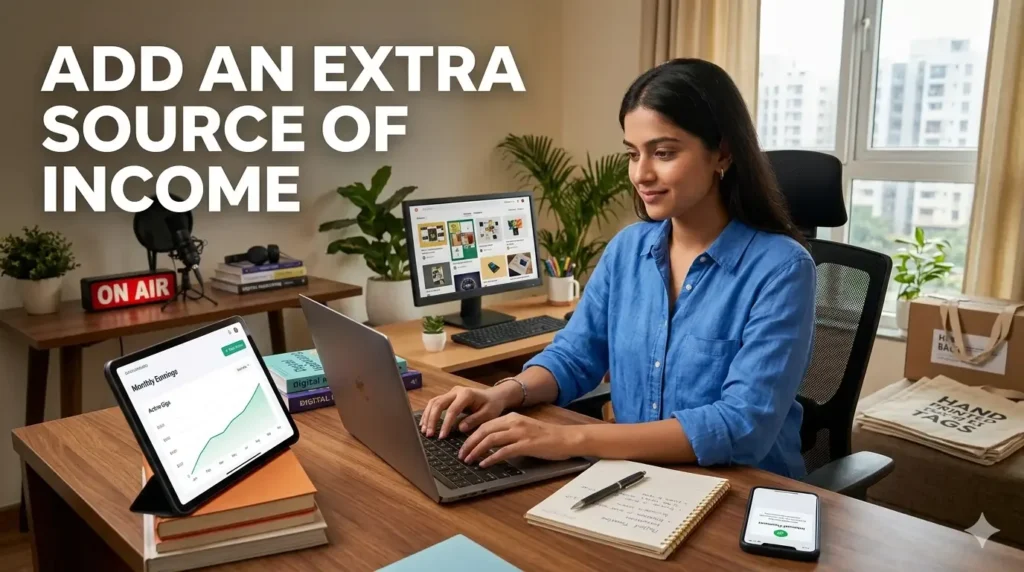
Relying on a single income can feel limiting, especially in uncertain times.
This is why many people are now exploring additional ways to earn.
A side income doesn’t have to be overwhelming. It can start small and grow gradually.
Some practical options include:
- Freelance work based on your skills
- Creating content online
- Selling digital products
- Teaching or tutoring
- Affiliate-based earning
- Small online businesses
The goal is not to overwork yourself but to create more financial flexibility.
Even a modest extra income can make a noticeable difference in how quickly you save and invest.
Step 7: Improve Your Relationship With Money

This part is often overlooked, but it plays a big role.
Your financial habits are influenced by what you’ve seen and heard growing up.
If you’ve always been told that money is difficult to manage or investing is risky, those beliefs can stay with you.
You might find yourself thinking: “I’m not good with money”
“I’ll figure it out later”
“This is too complicated”
But these are just patterns, not facts.
Start replacing them with more practical thoughts:
- Managing money is a skill I can learn
- I can take small steps and improve
- I don’t need to know everything at once
Confidence builds gradually. It comes from action, not from waiting.
Step 8: Be Careful With Lifestyle Upgrades

As your income increases, your spending naturally tries to increase as well.
It starts with small upgrades — better gadgets, more outings, more convenience. Over time, it becomes a habit.
And before you realise it, you’re earning more but not really saving more.
This is where many people get stuck.
The key is to upgrade your lifestyle slowly while increasing your savings and investments at a faster pace.
That way, your financial position continues to improve.
Step 9: Learn to Set Financial Boundaries

There will be times when spending feels expected.
Social plans, celebrations, trends, or even peer pressure can influence your decisions.
Saying no in these situations can feel uncomfortable, especially when everyone else is participating.
But financial independence requires clarity.
You don’t have to justify every decision. It’s okay to prioritise your goals.
A simple refusal, without over-explaining, is enough.
Step 10: Keep Adjusting as You Grow
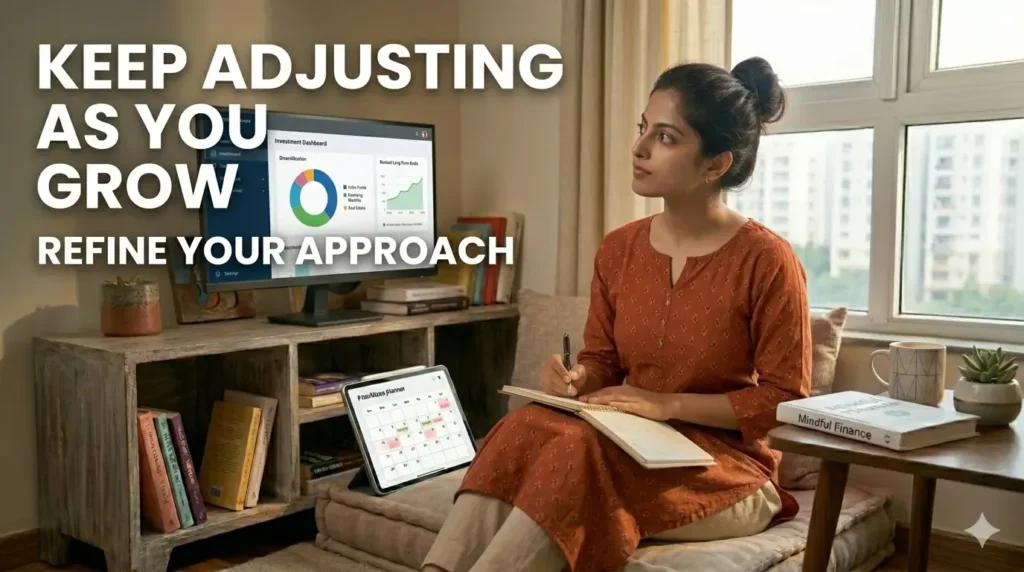
Your financial journey will not stay the same.
As your career grows and your priorities change, your approach to money will also evolve.
You might earn more, take on new responsibilities, or set different goals.
So it’s important to stay flexible.
Keep learning from reliable sources, stay updated, and refine your approach when needed.
You don’t have to be perfect. You just have to stay consistent.
What This Journey Can Look Like Over Time
To make it more practical, here’s a general way this can unfold:
In your early 20s:
- You start tracking expenses
- You build a basic saving habit
- You begin small investments
In your mid 20s:
- Your income grows
- You build a proper emergency fund
- You explore additional income sources
In your late 20s:
- Your investments become more structured
- You have multiple income streams
- You gain clarity about long-term goals
Everyone’s path will look slightly different, and that’s completely fine.
What matters is steady progress.
The Shift That Comes With Financial Control
When you start managing your money well, something changes internally.
You begin to feel more stable and confident.
Decisions become easier because you’re not constantly worried about financial consequences.
You rely less on others and more on your own planning.
And gradually, you start trusting yourself more.
At that point, money is no longer just a necessity.
It becomes a tool.
Final Thoughts
Becoming financially independent before 30 doesn’t require perfection.
It requires awareness, consistency, and patience.
You don’t need a very high income to begin.
You don’t need complete knowledge from the start.
You don’t need to make big moves immediately.
You just need to take the first step.
Because once you do, everything becomes a little clearer with time.
And eventually, you reach a point where money is no longer a source of stress.
It becomes a source of freedom.